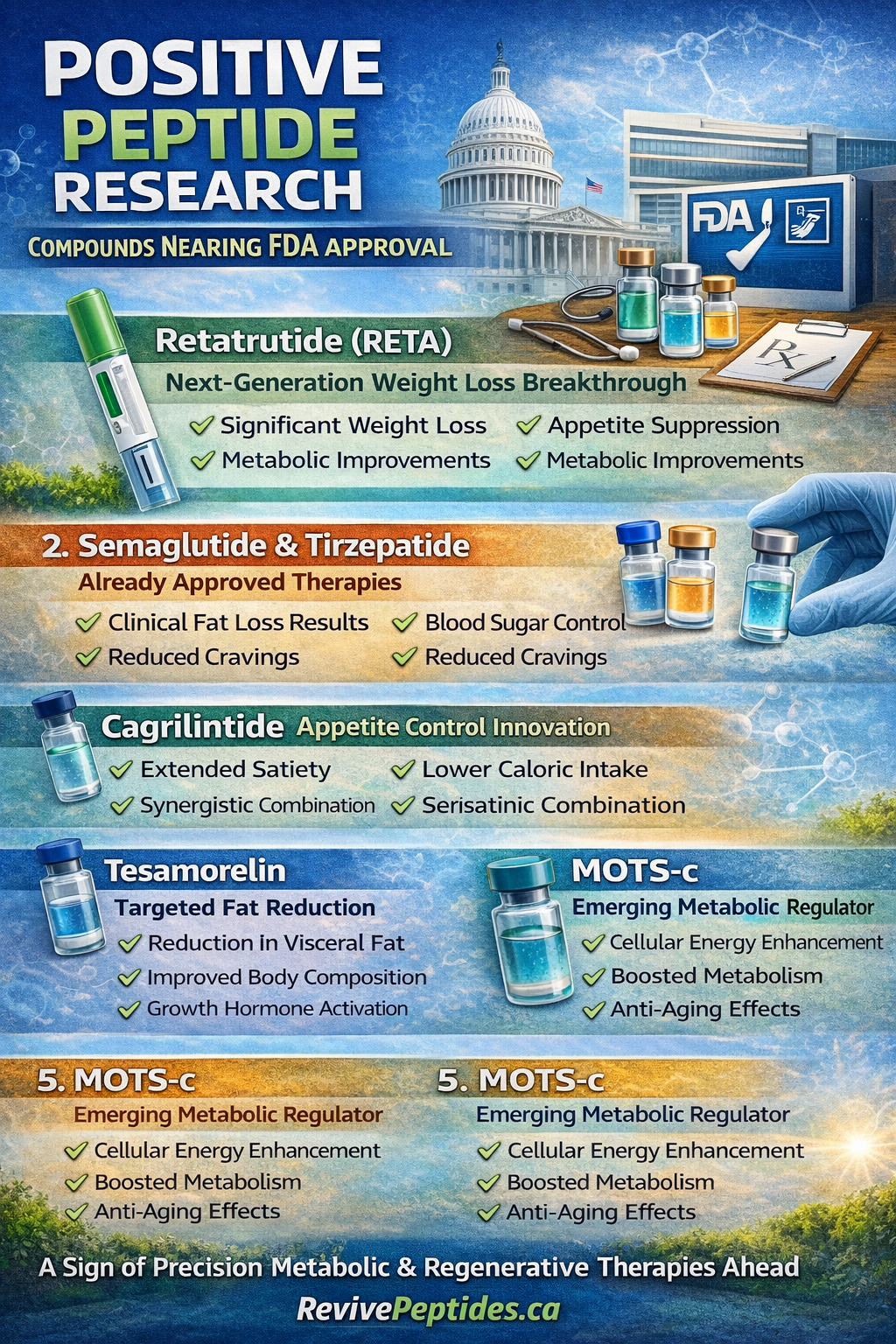
Positive Peptide Research: Compounds Approaching FDA Approval & What It Means
The peptide space is evolving rapidly, with several compounds moving closer to
FDA approval and mainstream recognition. These developments are driven by
strong clinical research showing promising results in areas like
weight loss, metabolic health, and chronic disease management.
In this article, we explore peptides and related compounds backed by positive research,
many of which are already approved in some form or are advancing through clinical trials.
Why FDA Approval Matters
FDA approval represents a high standard of safety, efficacy, and clinical validation.
Compounds that reach this stage typically undergo years of research and testing.
- Clinical trial validation
- Safety profile evaluation
- Consistent measurable outcomes
For researchers and consumers alike, this signals increasing confidence in a compound’s potential.
1. Retatrutide (RETA) – Next-Generation Weight Loss Breakthrough
Retatrutide is one of the most talked-about compounds currently in advanced clinical trials.
It is being studied for its powerful effects on fat loss and metabolic regulation.
What Research Shows:
- Significant weight reduction in clinical trials
- Strong appetite suppression
- Improved metabolic markers
RETA represents a new class of multi-pathway metabolic compounds and is considered a major
potential breakthrough in obesity research.
2. Semaglutide & Tirzepatide – Already Approved Leaders
While not new, Semaglutide and Tirzepatide have set the foundation
for the current peptide boom.
Key Benefits:
- Clinically proven weight loss
- Improved blood sugar control
- Reduced appetite and cravings
These compounds demonstrate what successful peptide-based therapies can achieve,
paving the way for next-generation options like RETA.
3. Cagrilintide – Appetite Control Innovation
Cagrilintide is another compound gaining attention in clinical research
for its role in long-term appetite regulation.
Potential Benefits:
- Extended satiety
- Reduced caloric intake
- Synergistic effects when combined with other compounds
It is often studied alongside other metabolic peptides, suggesting strong future potential.
4. Tesamorelin – Targeted Fat Reduction
Tesamorelin is already FDA-approved for specific uses and is being further researched
for its broader applications.
Research Highlights:
- Reduction in visceral fat
- Improved body composition
- Growth hormone pathway activation
Its targeted effects make it unique compared to general weight loss compounds.
5. MOTS-c – Emerging Metabolic Regulator
MOTS-c is still in earlier stages but shows promising research related to
cellular energy and metabolic efficiency.
What Makes It Interesting:
- Mitochondrial origin (rare among peptides)
- Potential improvements in energy utilization
- Links to longevity research
While not close to approval yet, it represents the future direction of peptide science.
What This Means for the Future
The growing number of peptides nearing approval signals a major shift toward
precision metabolic and regenerative therapies.
- More targeted fat loss solutions
- Better control over appetite and metabolism
- Advancements in anti-aging and cellular health
Final Thoughts
Positive research and ongoing clinical trials suggest that peptides are becoming one of the most
important areas in modern biomedical science.
Compounds like Retatrutide, Cagrilintide, and MOTS-c highlight the next wave
of innovation, while already approved options continue to validate the space.
As research progresses, the peptide landscape will likely expand into even more advanced
and specialized applications.
Disclaimer: All products are intended for research purposes only.
Not for human consumption.