Blog
Peptide Research in Canada 2026

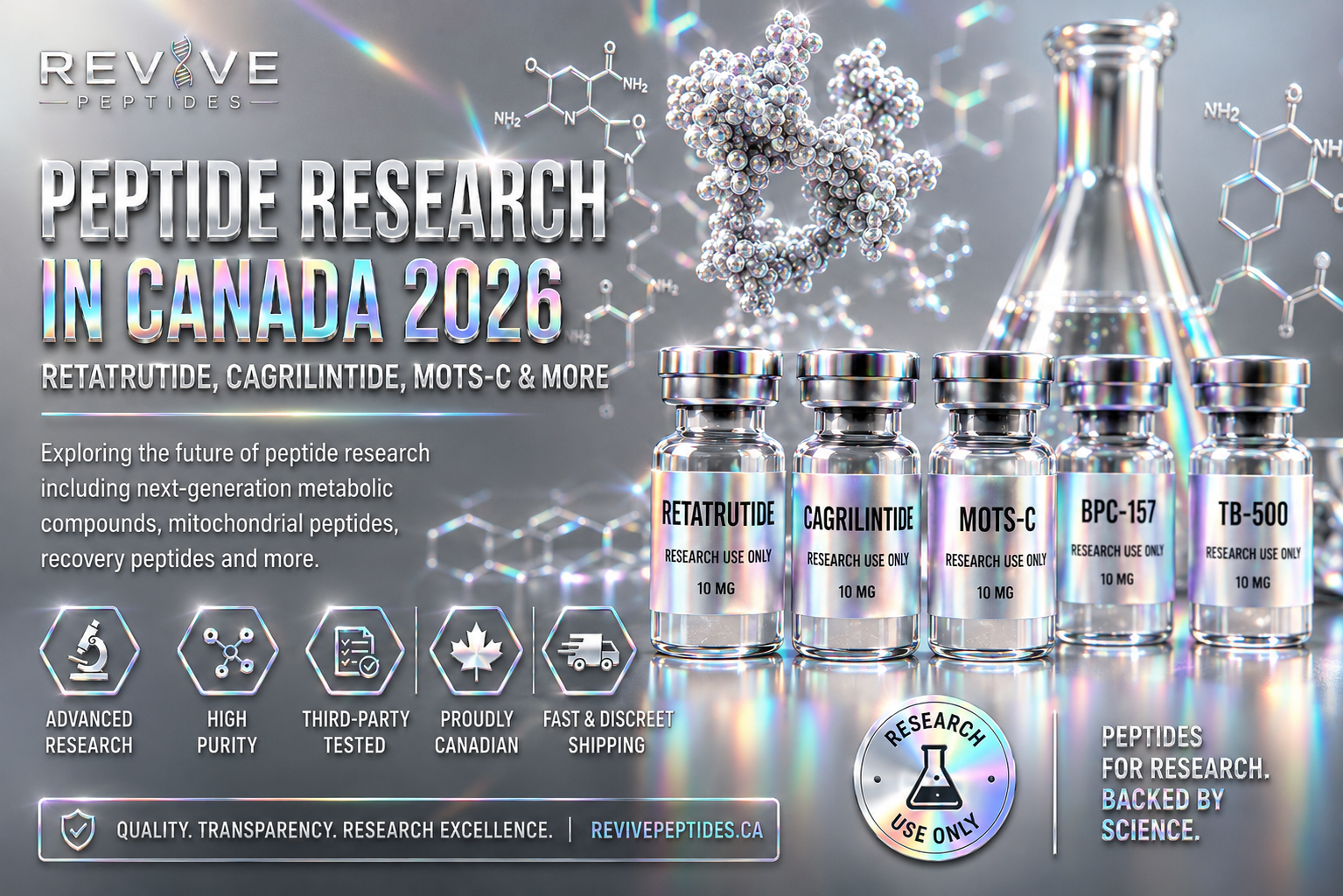
Peptide Research in Canada 2026: Retatrutide, Cagrilintide, MOTS-c & More
Peptide research in Canada is growing quickly as new compounds continue to attract attention for their roles in metabolism, cellular signalling, recovery, body composition, and energy regulation.
At Revive Peptides Canada, we follow emerging peptide research closely and provide high-quality research compounds for Canadian researchers.
Here are some of the most interesting peptides and metabolic compounds being researched in 2026.
1. Retatrutide – One of the Most Watched Compounds of 2026
Retatrutide has become one of the biggest names in current metabolic research. Unlike traditional single-pathway compounds, Retatrutide interacts with three important receptors:
- GLP-1
- GIP
- Glucagon
This triple-receptor approach has made Retatrutide especially interesting for research involving metabolism, energy balance, appetite signalling, and body-weight regulation.
Large clinical studies have continued to produce strong interest in Retatrutide, making it one of the most closely followed next-generation compounds in metabolic research.
2. Cagrilintide – A Different Approach to Appetite Research
Cagrilintide is another compound receiving significant attention. Instead of primarily targeting GLP-1 pathways, Cagrilintide is based on the hormone amylin.
Amylin plays an important role in satiety and metabolic signalling, making Cagrilintide an interesting research compound for scientists studying:
- Appetite signalling
- Satiety
- Energy intake
- Metabolic regulation
Researchers are also studying Cagrilintide alongside GLP-1 compounds, creating growing interest in multi-pathway metabolic research.
3. Semaglutide – The Compound That Changed Metabolic Research
Semaglutide helped bring GLP-1 research into the mainstream. It works through the GLP-1 receptor, which is involved in several important metabolic and appetite-related signalling pathways.
Its success has helped drive development of newer compounds that target multiple receptors instead of relying on a single pathway.
4. Tirzepatide – Dual-Receptor Research
Tirzepatide expanded on GLP-1 research by targeting both GLP-1 and GIP receptors.
This dual-receptor approach helped demonstrate how combining metabolic pathways could produce different biological effects than targeting GLP-1 alone.
Tirzepatide has also helped pave the way for newer triple-receptor research involving compounds such as Retatrutide.
5. MOTS-c – Mitochondrial Peptide Research
MOTS-c is one of the more unique peptides currently being studied. Unlike many commonly researched peptides, MOTS-c originates from mitochondrial DNA.
This has created interest in MOTS-c research involving:
- Cellular energy production
- Mitochondrial function
- Metabolic signalling
- Cellular stress responses
- Age-related biological pathways
Mitochondrial peptides represent a newer area of research and could become an increasingly important part of peptide science.
6. Tesamorelin – Growth Hormone Pathway Research
Tesamorelin is studied for its interaction with the growth hormone-releasing hormone pathway.
Research involving Tesamorelin has explored areas such as:
- Growth hormone signalling
- IGF-1 activity
- Body composition
- Visceral fat biology
- Metabolic function
This makes it particularly interesting for researchers studying hormone signalling and metabolic pathways.
Why Peptide Research Is Moving Toward Multiple Pathways
One of the biggest trends in modern peptide research is the move away from targeting only one biological pathway.
Researchers are increasingly studying compounds that interact with two, three, or even more signalling systems at the same time.
Examples include:
- Semaglutide – GLP-1
- Tirzepatide – GLP-1 + GIP
- Retatrutide – GLP-1 + GIP + Glucagon
This progression shows how quickly metabolic peptide research is evolving.
Research Peptides in Canada
As interest in research peptides in Canada increases, Canadian researchers are also paying more attention to product quality, purity, testing, and reliable domestic sourcing.
When choosing a Canadian peptide supplier, researchers should look for:
- Third-party laboratory testing
- High peptide purity
- HPLC testing
- Mass spectrometry testing
- Clear Certificates of Analysis
- Reliable Canadian shipping
- Professional packaging and storage
Why Choose Revive Peptides Canada?
Revive Peptides is a Canadian research peptide supplier focused on providing high-quality research compounds with an emphasis on purity, transparency, testing, and dependable Canadian service.
Our growing research catalogue includes some of the most talked-about compounds in modern peptide research, including metabolic, mitochondrial, recovery, and signalling peptides.
Researchers can also use the Revive Peptides Calculator for quick concentration and research calculations.
Popular Peptide Research Topics in 2026
Some of the fastest-growing areas of peptide research currently include:
- Metabolic peptide research
- GLP-1 and GIP signalling
- Retatrutide research
- Amylin and Cagrilintide research
- Mitochondrial peptides such as MOTS-c
- Growth hormone signalling peptides
- Cellular energy and longevity research
- Recovery and tissue signalling research
The Future of Peptide Research
Peptide science is moving quickly.
Compounds like Retatrutide and Cagrilintide are pushing metabolic research toward increasingly advanced multi-pathway approaches, while peptides such as MOTS-c are opening entirely different areas of mitochondrial and cellular research.
As scientific understanding continues to improve, researchers are likely to discover even more specialized peptides capable of interacting with very specific biological pathways.
Final Thoughts
2026 is shaping up to be another major year for peptide research.
From Retatrutide and Cagrilintide to mitochondrial peptides such as MOTS-c, researchers now have access to a rapidly expanding range of compounds and research pathways.
Revive Peptides Canada will continue following the latest developments while providing Canadian researchers with high-quality, independently tested research peptides.
Explore the latest research compounds available from RevivePeptides.ca.
Emerging Peptides Researchers Are Watching
Beyond the most well-known metabolic compounds, several other peptides continue to attract interest across laboratory research.
BPC-157
BPC-157 is widely discussed in peptide research because of studies examining tissue signalling, cellular repair mechanisms, inflammation pathways, and gastrointestinal biology.
TB-500
TB-500 is commonly associated with research involving thymosin beta-4 pathways, cell migration, tissue regeneration, and recovery mechanisms.
GHK-Cu
GHK-Cu is a naturally occurring copper-binding peptide studied in areas involving skin biology, collagen signalling, wound repair, and cellular regeneration.
Ipamorelin
Ipamorelin is researched for its interaction with growth hormone secretagogue receptors and its effects on growth hormone signalling.
CJC-1295
CJC-1295 is another peptide frequently studied in connection with growth hormone releasing pathways and endocrine signalling.
Metabolic Peptides vs Recovery Peptides
Peptide research covers many different biological systems. Two of the largest categories are metabolic research peptides and recovery-focused peptides.
| Research Category | Example Compounds | Common Research Areas |
|---|---|---|
| Metabolic | Retatrutide, Cagrilintide, Semaglutide, Tirzepatide | Metabolism, appetite signalling, glucose regulation, energy balance |
| Mitochondrial | MOTS-c | Cellular energy, metabolic stress, mitochondrial signalling |
| Growth Hormone | Tesamorelin, CJC-1295, Ipamorelin | Growth hormone pathways, IGF-1 signalling, endocrine research |
| Recovery | BPC-157, TB-500 | Tissue signalling, cellular repair, inflammation pathways |
| Skin & Cellular | GHK-Cu | Collagen signalling, skin biology, cellular regeneration |
Why Peptide Purity Matters in Research
One of the most important considerations when sourcing research peptides in Canada is purity.
Research results depend on researchers knowing as much as possible about the material being studied. Impurities or incorrectly identified compounds can introduce variables that make experimental results more difficult to interpret.
This is why analytical testing is an important part of the research peptide industry.
HPLC Testing
High-performance liquid chromatography, commonly known as HPLC, can be used to evaluate the composition and purity of a peptide sample.
Mass Spectrometry
Mass spectrometry can help verify molecular identity by measuring the mass-to-charge ratio of molecules within a sample.
Using multiple analytical methods provides researchers with greater confidence when evaluating research material.
Why Canadian Researchers Buy Peptides Domestically
Searching for peptides in Canada instead of ordering internationally can offer several practical advantages.
- Faster domestic delivery
- Reduced international shipping delays
- Easier access to Canadian customer support
- Canadian pricing
- Clearer product documentation
- More predictable shipping times
Revive Peptides focuses on making research compounds easily accessible to Canadian researchers through a dedicated domestic peptide supplier.
Most Searched Peptides in Canada
Interest in peptide research continues to change as new studies are published. Some of the compounds generating strong research interest include:
- Retatrutide
- Cagrilintide
- MOTS-c
- BPC-157
- TB-500
- GHK-Cu
- Tesamorelin
- CJC-1295
- Ipamorelin
As new research develops, the compounds receiving the most attention will continue to evolve.
Frequently Asked Questions About Peptides in Canada
Where can researchers buy peptides in Canada?
Canadian researchers can source research peptides through domestic suppliers such as Revive Peptides Canada, which focuses on tested research compounds and Canadian shipping.
What should I look for in a Canadian peptide supplier?
Important factors include analytical testing, product purity, clear COAs, proper packaging, transparent product information, and reliable domestic shipping.
What is the difference between HPLC and mass spectrometry?
HPLC is commonly used to separate compounds and evaluate sample purity, while mass spectrometry can help confirm molecular identity.
What peptide is receiving the most attention in 2026?
Retatrutide is currently one of the most closely followed compounds in metabolic research because of its triple GLP-1, GIP, and glucagon receptor activity.
What is the difference between Retatrutide and Tirzepatide?
Tirzepatide targets GLP-1 and GIP receptors, while Retatrutide adds activity at the glucagon receptor, creating a triple-receptor mechanism.
What is the difference between BPC-157 and TB-500?
Although both are frequently discussed in recovery-related peptide research, they are different compounds that interact with different biological pathways. BPC-157 is commonly studied in tissue and gastrointestinal research, while TB-500 research often focuses on thymosin beta-4-related cellular processes.
Explore Research Peptides at Revive Peptides Canada
Revive Peptides continues to expand its Canadian research catalogue as new compounds and areas of peptide science emerge.
Whether your research focuses on metabolic pathways, mitochondrial signalling, recovery, cellular biology, or growth hormone pathways, quality and transparency should remain central when selecting research material.
Browse the latest research peptides available in Canada from Revive Peptides.
Emerging Peptides Researchers Are Watching
Beyond the most well-known metabolic compounds, several other peptides continue to attract interest across laboratory research.
BPC-157
BPC-157 is widely discussed in peptide research because of studies examining tissue signalling, cellular repair mechanisms, inflammation pathways, and gastrointestinal biology.
TB-500
TB-500 is commonly associated with research involving thymosin beta-4 pathways, cell migration, tissue regeneration, and recovery mechanisms.
GHK-Cu
GHK-Cu is a naturally occurring copper-binding peptide studied in areas involving skin biology, collagen signalling, wound repair, and cellular regeneration.
Ipamorelin
Ipamorelin is researched for its interaction with growth hormone secretagogue receptors and its effects on growth hormone signalling.
CJC-1295
CJC-1295 is another peptide frequently studied in connection with growth hormone releasing pathways and endocrine signalling.
Metabolic Peptides vs Recovery Peptides
Peptide research covers many different biological systems. Two of the largest categories are metabolic research peptides and recovery-focused peptides.
| Research Category | Example Compounds | Common Research Areas |
|---|---|---|
| Metabolic | Retatrutide, Cagrilintide, Semaglutide, Tirzepatide | Metabolism, appetite signalling, glucose regulation, energy balance |
| Mitochondrial | MOTS-c | Cellular energy, metabolic stress, mitochondrial signalling |
| Growth Hormone | Tesamorelin, CJC-1295, Ipamorelin | Growth hormone pathways, IGF-1 signalling, endocrine research |
| Recovery | BPC-157, TB-500 | Tissue signalling, cellular repair, inflammation pathways |
| Skin & Cellular | GHK-Cu | Collagen signalling, skin biology, cellular regeneration |
Why Peptide Purity Matters in Research
One of the most important considerations when sourcing research peptides in Canada is purity.
Research results depend on researchers knowing as much as possible about the material being studied. Impurities or incorrectly identified compounds can introduce variables that make experimental results more difficult to interpret.
This is why analytical testing is an important part of the research peptide industry.
HPLC Testing
High-performance liquid chromatography, commonly known as HPLC, can be used to evaluate the composition and purity of a peptide sample.
Mass Spectrometry
Mass spectrometry can help verify molecular identity by measuring the mass-to-charge ratio of molecules within a sample.
Using multiple analytical methods provides researchers with greater confidence when evaluating research material.
Why Canadian Researchers Buy Peptides Domestically
Searching for peptides in Canada instead of ordering internationally can offer several practical advantages.
- Faster domestic delivery
- Reduced international shipping delays
- Easier access to Canadian customer support
- Canadian pricing
- Clearer product documentation
- More predictable shipping times
Revive Peptides focuses on making research compounds easily accessible to Canadian researchers through a dedicated domestic peptide supplier.
Most Searched Peptides in Canada
Interest in peptide research continues to change as new studies are published. Some of the compounds generating strong research interest include:
- Retatrutide
- Cagrilintide
- MOTS-c
- BPC-157
- TB-500
- GHK-Cu
- Tesamorelin
- CJC-1295
- Ipamorelin
As new research develops, the compounds receiving the most attention will continue to evolve.
Frequently Asked Questions About Peptides in Canada
Where can researchers buy peptides in Canada?
Canadian researchers can source research peptides through domestic suppliers such as Revive Peptides Canada, which focuses on tested research compounds and Canadian shipping.
What should I look for in a Canadian peptide supplier?
Important factors include analytical testing, product purity, clear COAs, proper packaging, transparent product information, and reliable domestic shipping.
What is the difference between HPLC and mass spectrometry?
HPLC is commonly used to separate compounds and evaluate sample purity, while mass spectrometry can help confirm molecular identity.
What peptide is receiving the most attention in 2026?
Retatrutide is currently one of the most closely followed compounds in metabolic research because of its triple GLP-1, GIP, and glucagon receptor activity.
What is the difference between Retatrutide and Tirzepatide?
Tirzepatide targets GLP-1 and GIP receptors, while Retatrutide adds activity at the glucagon receptor, creating a triple-receptor mechanism.
What is the difference between BPC-157 and TB-500?
Although both are frequently discussed in recovery-related peptide research, they are different compounds that interact with different biological pathways. BPC-157 is commonly studied in tissue and gastrointestinal research, while TB-500 research often focuses on thymosin beta-4-related cellular processes.
Explore Research Peptides at Revive Peptides Canada
Revive Peptides continues to expand its Canadian research catalogue as new compounds and areas of peptide science emerge.
Whether your research focuses on metabolic pathways, mitochondrial signalling, recovery, cellular biology, or growth hormone pathways, quality and transparency should remain central when selecting research material.
Browse the latest research peptides available in Canada from Revive Peptides.